 Annual Leave Tracker
Stress Leave Workplace Guide: Know Your Rights and Responsibilities

Let's get one thing straight from the start: there’s no formal, legal category called 'stress leave' in the UK. When we talk about stress leave in the workplace, we're actually referring to sick leave taken for an illness like stress, anxiety, or burnout that’s been caused or made worse by work. Getting this distinction right is the first step for everyone involved.
Demystifying Workplace Stress Leave
Think of employee stress like the engine warning light on your car's dashboard. You could ignore it for a bit, but that path often leads to a full-on breakdown—something far more disruptive and costly to fix down the line. That's why having a clear, supportive way to handle stress-related absences isn't just a 'nice-to-have' anymore; it's a crucial part of running a modern business.
For employers, tackling the root causes of workplace stress is both a legal duty and a smart business move. For employees, understanding your rights gives you the confidence to ask for help and take the time you need to properly recover.
Understanding the Core Concept
The most important thing to grasp is that stress leave is managed under the same umbrella as any other sickness absence. There isn't a different form to fill out or a separate set of rules to follow. All the standard procedures—how you report an absence, when you need to provide a doctor's 'fit note', and how sick pay works—are exactly the same.
The real challenge isn't administrative; it's cultural. The goal is to build a workplace where someone feels just as comfortable calling in sick due to burnout as they would with the flu. That takes trust, open communication, and genuine support from the top down.
This infographic breaks down the essential components of stress leave in the workplace.
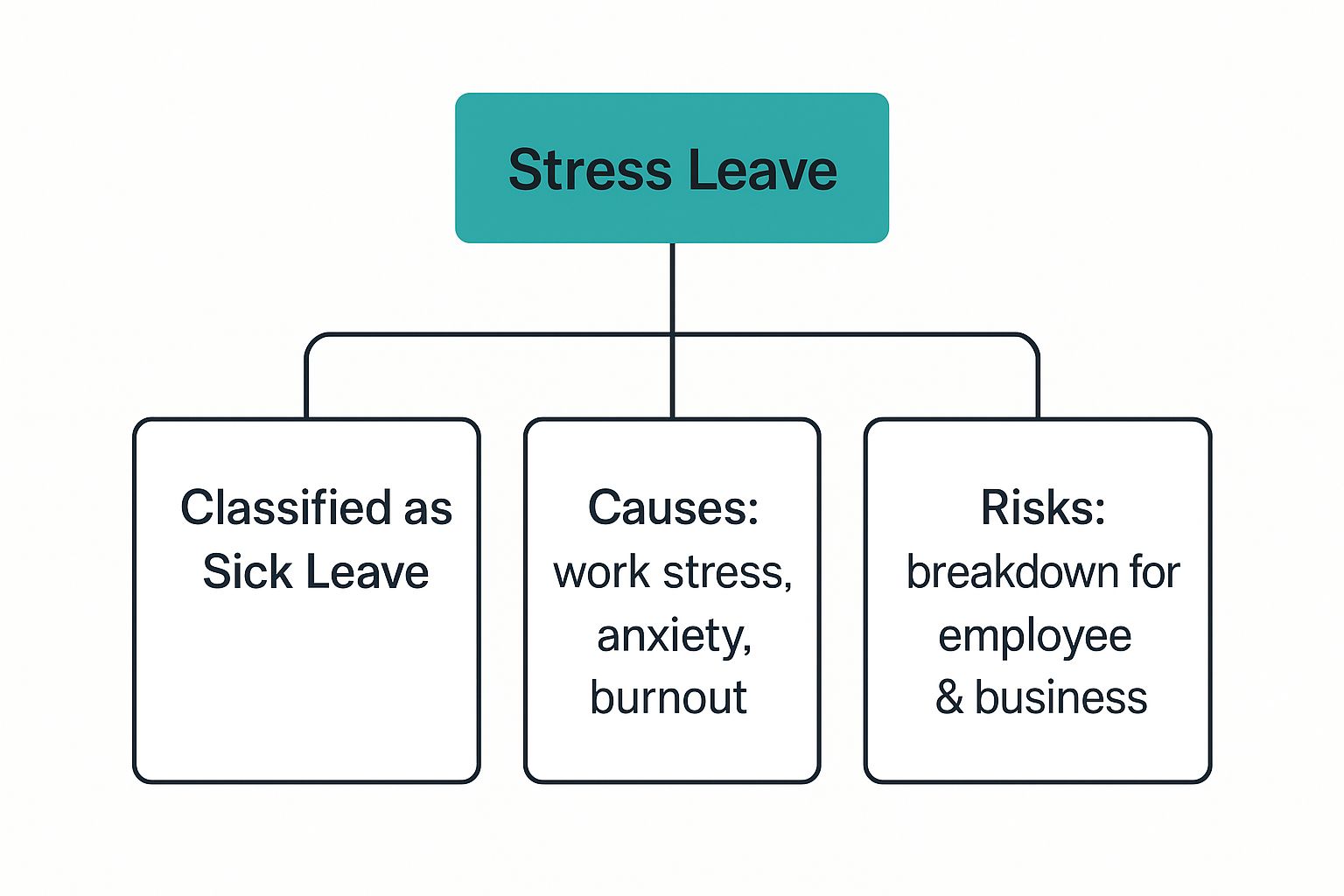
As you can see, stress leave is legally just sick leave. It’s typically triggered by pressures at work, and turning a blind eye to it creates serious risks for both the individual and the business.
Why It Matters More Than Ever
The scale of this issue is staggering. In the UK, stress, depression, and anxiety are the leading cause of lost working days. According to the Health and Safety Executive (HSE), these conditions led to an estimated 16.4 million working days lost.
What’s more, the average time off for these reasons was around 21.1 days—significantly longer than for other common illnesses. You can dig into more workplace health insights on the HSE's official site. These numbers aren't just statistics; they show the very real impact that unmanaged stress has on people's lives and the nation's productivity, making a clear policy absolutely essential.
Understanding Your Legal Rights and Duties

Navigating the legal side of stress leave can feel like a minefield, but it really boils down to a few core principles that protect everyone involved. The key piece of legislation here is the Health and Safety at Work Act 1974. While it might sound like it’s all about hard hats and high-vis jackets, its reach is much broader.
This Act establishes a clear 'duty of care' for employers, legally requiring them to protect the health, safety, and welfare of their staff. Crucially, this absolutely includes mental wellbeing. Think of it this way: your employer has the same legal responsibility to manage risks to your mental health as they do to fix a trailing cable or faulty piece of machinery. It’s all about creating a safe working environment in every sense of the word.
What's Expected from Employers and Employees?
When someone needs to take time off for stress, there’s a clear process that both sides need to follow. For the first seven calendar days of any absence, an employee can 'self-certify' their illness without needing to see a doctor. This gives them immediate breathing space to focus on recovery.
Once the absence goes beyond seven days, a 'fit note' (what we used to call a sick note) from a GP or other healthcare professional becomes necessary. This document is what officially confirms that the employee isn't fit for work or might be able to return with some changes.
A fit note is more than just a permission slip for absence; it's a communication tool. It can suggest practical changes—like a phased return, altered duties, or different working hours—that can help facilitate a successful and sustainable return to work.
Getting these basics right helps keep everything transparent and managed fairly. Both employees and managers should feel empowered by understanding your rights concerning mental health sick leave in the UK.
To make it even clearer, here's a quick breakdown of who is responsible for what during a period of stress leave.
Key Responsibilities for Managing Stress Leave
| Responsibility Area | Employee's Role | Employer's Role |
|---|---|---|
| Initial Reporting | Inform the employer about the absence as soon as possible, following the company's reporting procedure. | Acknowledge the absence promptly and with empathy. Explain the next steps, including self-certification. |
| Certification | Provide a self-certification form for the first 7 days. Obtain and submit a GP's fit note for absences longer than 7 days. | Keep accurate records of the absence and any fit notes received. Maintain confidentiality at all times. |
| Communication | Maintain reasonable contact with the employer as agreed, providing updates on their condition and expected return. | Initiate and maintain regular, supportive contact. Discuss the fit note's recommendations and plan for a return. |
| Return to Work | Engage in discussions about returning to work, including any potential adjustments suggested by their GP. | Proactively discuss and implement reasonable adjustments to facilitate a smooth and sustainable return. |
This shared responsibility ensures the process is handled correctly and compassionately, paving the way for a positive outcome.
Protections Under the Equality Act 2010
There are times when work-related stress can be so severe and long-lasting that it falls under the definition of a disability in the Equality Act 2010. For a condition to qualify, it must have a "substantial and long-term adverse effect" on an individual's ability to carry out normal day-to-day activities.
If an employee's condition meets this threshold, they are legally protected from discrimination. This also activates a crucial duty for the employer: the legal requirement to make reasonable adjustments.
So, what do these adjustments actually look like? They aren't about special treatment; they are practical steps to remove barriers the employee is facing because of their health condition. They can include things like:
- Modifying working hours: Allowing for flexible start and finish times or a temporary reduction in hours.
- Changing the work environment: Providing a quieter workspace to reduce sensory overload or anxiety.
- Altering responsibilities: Temporarily reallocating tasks that are major sources of stress.
- Providing specialist equipment: Offering software or tools that might help with focus and organisation.
These aren't just legal formalities. They are sensible, often simple, changes that can help an employee manage their health while remaining a productive and valued member of the team.
How to Spot the Early Signs of Workplace Stress

The best way to handle stress leave in the workplace is to stop it from being needed in the first place. This requires a shift in mindset—from reacting to problems to proactively preventing them. It’s about giving managers and team members the tools to see the subtle signs of distress before they snowball into a full-blown crisis.
Think of it like being a good gardener. You don't wait for your prize-winning rose bush to completely wilt before you give it some water. You keep an eye out for the first signs of dryness. In the office, this translates to paying close attention to changes in an employee's behaviour and performance, as these are often the first clues that pressure is becoming unsustainable.
Recognising the Behavioural Red Flags
Often, the earliest warning signs are behavioural. These are small (or large) shifts from a person's usual way of acting that can signal they're struggling to cope. Noticing these changes is a crucial first step for any manager or colleague committed to creating a genuinely supportive workplace.
Here are some of the most common behavioural signals to watch for:
- Increased Irritability or Mood Swings: A normally level-headed colleague might become easily agitated, or you might notice uncharacteristic emotional outbursts.
- Social Withdrawal: An employee who is usually at the centre of team banter starts to isolate themselves, maybe by skipping after-work socials or always eating lunch at their desk.
- Higher Rates of Absenteeism: A pattern of frequent, short-term absences, often for vague reasons, can be a sign someone is avoiding the office due to overwhelming stress.
- Changes in Work Patterns: This could go either way. You might see someone suddenly working much longer hours and sending emails late into the night, or they might start arriving late and leaving early.
Of course, these aren't definitive proof of stress on their own. But they are clear prompts to check in with a colleague. A simple, private conversation starting with, "How are you getting on?" can make a world of difference.
Spotting Performance-Related Symptoms
Alongside changes in behaviour, a noticeable dip in performance is often a very tangible sign that an employee is under too much pressure. When our cognitive load gets too heavy, it directly impacts the quality and consistency of our work.
When a high-performer suddenly starts missing deadlines or making uncharacteristic errors, it's rarely due to a sudden drop in competence. More often, it's a signal that their mental and emotional resources are being exhausted elsewhere, and stress is the likely culprit.
Keep an eye out for these performance-related indicators:
- Difficulty Concentrating: The person may seem distracted during meetings or find it hard to focus on a single task.
- Missed Deadlines: A consistent pattern of falling behind on work that they previously managed without any issues.
- Procrastination: Putting off important tasks or seeming paralysed when it comes to making decisions.
- Reduced Quality of Work: An increase in mistakes or a clear decline in the usual standard of their output.
Recent findings reveal a startling generational divide in how stress impacts UK workers. While one in five UK employees have taken time off for poor mental health caused by stress, this figure rockets among younger staff. A huge 35% of those aged 18-24 have taken time off for this exact reason in the last year. These stats really underline how important it is to be tuned in to the specific pressures different demographics are facing. You can delve deeper into the data on this generational stress gap and its impact on the workplace.
Creating a Supportive Workplace Stress Policy
A formal policy on workplace stress is far more than just another document in the company handbook. It’s a powerful statement to your team that their mental wellbeing truly matters. It shows you’re not just talking the talk, but are ready to support anyone who's struggling. You don't need to start from a blank page, either; it's about weaving thoughtful mental health support into the sickness absence policies you already have.
Think of it this way: your building has general emergency procedures, but you also have a specific fire safety plan. That plan provides clear, life-saving steps for a very particular crisis. A stress policy does the same thing for mental health, giving managers and employees a clear roadmap to follow, which helps to remove a lot of the uncertainty and stigma.
Core Components of an Effective Policy
For your policy to work, it has to build trust and provide clarity. It needs to lay out the practical steps someone should take when they're feeling overwhelmed by work-related stress, who they can turn to, and what kind of support they can genuinely expect from the business. It turns a vague idea of 'wellbeing' into a real, reliable process.
Here are the essential ingredients for a strong policy:
- Confidential Reporting Channels: Make it crystal clear who an employee can talk to. Their line manager is the obvious first port of call, but you must offer alternatives like HR, a senior leader, or a trained Mental Health First Aider. This is crucial in case the manager is part of the problem.
- Clear Sick Pay Guidelines: Don't make people guess about money. Reiterate your company’s sick pay rules, spelling out what they're entitled to for both Statutory Sick Pay (SSP) and any company sick pay. Being upfront about this can significantly reduce financial anxiety when someone is already vulnerable.
- A Structured Return-to-Work Process: Outline the journey back to work. This should cover things like phased returns, potential reasonable adjustments to their role or workload, and regular, informal check-ins to make sure the transition is smooth and sustainable.
Transforming Policy into Supportive Practice
A policy is only as good as the paper it's printed on unless it's put into action. It should empower your managers to be the first and most important line of support. They don't need to be counsellors, but they do need to be trained to listen with empathy, point people towards the right resources, and make practical adjustments.
Your workplace stress policy should be a living guide, not a document that gathers dust. It’s the practical tool that empowers managers to have supportive conversations and gives employees the confidence to seek help early, preventing minor issues from escalating into long-term absences.
For instance, your policy should explicitly state that a conversation about mental health will be treated with the exact same professionalism and privacy as one about physical health. That simple commitment helps to normalise the conversation around stress leave in the workplace. In the end, a solid policy is the bedrock of a culture where talking openly is encouraged and looking after employee wellbeing is a shared responsibility.
Managing an Employee's Return to Work

Helping someone back into the workplace after stress leave is more than just a box-ticking exercise. It calls for a thoughtful and genuinely supportive plan. The aim isn't simply to get them back to their desk; it's to reintegrate them into a healthy environment where they can feel secure and productive for the long haul. This process should start well before their official return date.
Keeping in touch during their absence is a real balancing act. You have to respect their privacy and their need for space, but complete silence can feel isolating. A light-touch, occasional check-in, even just a simple message saying you're thinking of them, can go a long way in keeping them connected to the team.
Designing a Phased Return to Work
Expecting an employee to jump straight back into a full-pelt, high-pressure schedule is often a recipe for a relapse. A far better, more sustainable approach is a phased return. This gives the person time to gradually build back their stamina and confidence, and it’s a key part of making reasonable adjustments.
This plan absolutely must be a team effort, created with the employee and shaped by any advice on their GP's fit note. It’s not something to be dictated. Here’s what it could involve:
- Modified Hours: Perhaps starting with a few half-days or a three-day week to begin with.
- Reduced Responsibilities: Temporarily handing over particularly demanding tasks to colleagues to ease the pressure.
- Regular Check-ins: Scheduling short, informal catch-ups to see how they're really doing, not just to talk about work.
A successful return-to-work plan is flexible and human-centric. It acknowledges that recovery isn’t always a straight line and builds in the space for adjustments as the employee reacclimates to their role and the workplace environment.
Let's think about a real-world example. Imagine an employee is returning after burnout caused by an overwhelming workload. Their phased return might begin with working three half-days in the first week, focused purely on their core duties. The following week, they could move to four longer days, slowly reintroducing other responsibilities alongside daily chats with their manager to make sure the pace feels right.
Using Tools to Support a Smoother Transition
It’s crucial to track these arrangements and any related absences with discretion and sensitivity. Modern leave management systems offer a confidential way to log sick leave, spot any patterns, and manage phased return schedules without relying on clunky, insecure spreadsheets. This protects employee privacy while giving HR important, anonymised insight. For instance, if you notice a pattern of absences in one department, it could signal a wider issue that needs looking into. You can learn more about how to boost your HR processes with staff absence management software in our detailed guide.
This dashboard from Annual Leave Tracker shows how you can get a clear, at-a-glance overview of team absences.
Having this kind of centralised view helps managers plan cover without any fuss. It also ensures the whole team is aware of and respects the returning employee’s modified schedule, which makes for a much smoother and more supportive transition for everyone involved.
The True Cost of Ignoring Workplace Stress
When you don’t get a handle on workplace stress, it’s not just a blow to company culture—it hits your bottom line, hard. The financial fallout goes way beyond just paying an employee who's off sick. It creates a ripple effect, dragging down team morale, productivity, and even the stability of your business.
Think of it like a leaky pipe. At first, it's just a drip—a few missed deadlines, a dip in enthusiasm. But ignore it, and soon you're dealing with a flood of escalating costs. You've got the direct hit of sick pay, the scramble to find cover for an absent team member, and the massive, often overlooked, expense of recruiting someone new when a great employee finally burns out and leaves.
Presenteeism: The Silent Productivity Killer
One of the most insidious costs is something called presenteeism. This is when people are physically at their desks but mentally checked out. They’re exhausted, stressed, and simply not firing on all cylinders. They show up, but they can't perform, leading to costly mistakes, missed opportunities, and a general drag on the whole team's energy.
It’s often harder to spot than an empty chair, but its impact is far greater.
When an employee is struggling with stress, their engagement plummets. They may be at their desk, but their creativity, problem-solving skills, and motivation are severely compromised, silently eroding your business's output.
The Staggering Financial Impact
The numbers speak for themselves. Poor mental health costs UK businesses a mind-boggling £56 billion every single year. A massive chunk of that, £28 billion, comes directly from presenteeism. For comparison, absenteeism accounts for about £6 billion.
Even more alarmingly, the cost of staff turnover due to mental health issues has exploded by over 150% in just three years, soaring from £8.6 billion in 2019 to £22.4 billion. With 35% of UK workers saying their job is bad for their mental health, this isn't a problem you can afford to ignore. Investing in your team's wellbeing is no longer a "nice-to-have"; it's a business necessity. You can learn more about the workplace mental health crisis on Spill.
Common Questions About Workplace Stress Leave
When it comes to taking time off for stress, both employees and employers often find themselves in uncharted territory. It’s natural to have questions, and getting clear answers is the first step to navigating the situation properly and with empathy. Let’s break down some of the most pressing concerns.
Can My Employer Fire Me for Taking Stress Leave?
This is often the biggest worry, so let's be direct: no, you can’t be fired simply for being on sick leave for stress.
If your condition becomes a long-term issue, it could be considered a disability under the Equality Act 2010. This gives you significant legal protection from discrimination.
That said, if a very long absence makes it impossible for you to do your job, an employer might have to consider a capability dismissal. This is always a last resort and must follow a strict, fair process that includes exploring every possible reasonable adjustment first.
Will I Receive Full Pay During Stress Leave?
What you get paid during stress leave comes down to your employment contract.
As a baseline, you are entitled to Statutory Sick Pay (SSP), provided you meet the criteria. However, many organisations offer a more generous company sick pay policy, which might top this up to your full salary for a certain amount of time.
It's essential to check your employee handbook or contract to understand exactly what you're entitled to. This clarity can help reduce financial anxiety during a difficult time. Our detailed guide explains more about UK Statutory Sick Pay requirements and who qualifies.
What if My Job Is Causing the Stress?
Your employer has a legal duty of care to protect your health and wellbeing. If work is the root cause of your stress, it’s crucial to let them know. Speak with your manager, HR, or even a mental health first aider if you have one.
You should also see your GP. They can issue a 'fit note' that not only validates your need to be off but can also suggest practical workplace adjustments. These recommendations are invaluable for helping your employer tackle the source of the problem for your return.
Managing any kind of absence requires clarity and consistency. Annual Leave Tracker simplifies the entire process, providing a discreet, centralised platform to track sick leave, manage phased returns, and ensure everyone is on the same page. Discover how Annual Leave Tracker can support your team's wellbeing.
Ready to Transform Your Leave Management?
Join 500+ companies using Annual Leave Tracker to streamline their HR processes.
Related Articles
How to Calculate Pro Rata Holidays A Simple UK Guide
Working out pro rata holidays is actually quite straightforward. At its core, it's just about making...
September 24, 2025
How to Calculate Annual Leave Entitlement: UK Guide
Figuring out annual leave entitlement doesn't have to be complicated. The basic formula is simple:...
September 24, 2025
HR Systems for Small Business A Complete Guide
Trying to run a small business using spreadsheets and a jumble of different documents is a bit like...
September 25, 2025