 Annual Leave Tracker
A Guide to Annual Leave Management Software
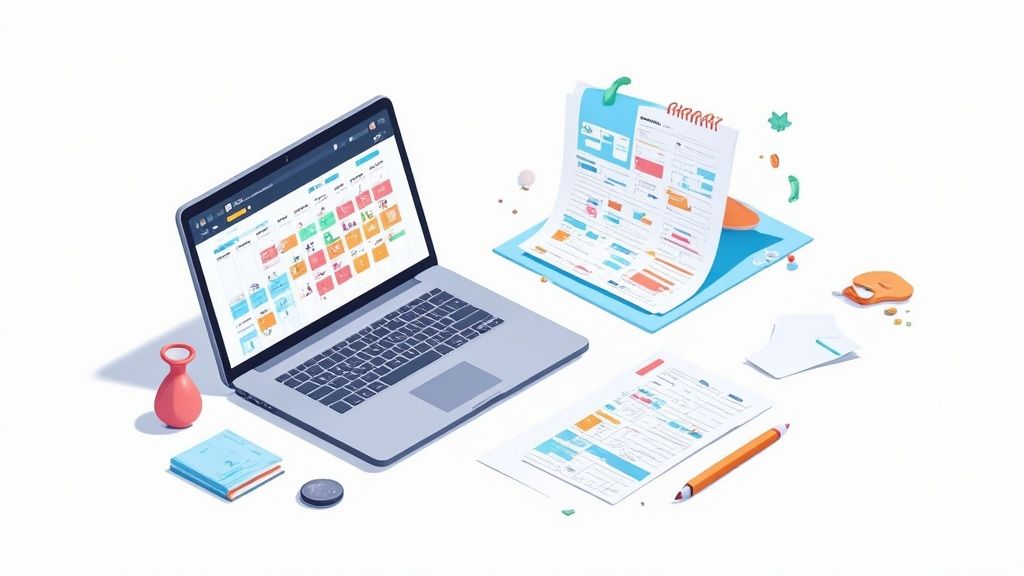
At its core, annual leave management software is a specialised tool designed to take the headache out of employee time off. It’s all about swapping out those clunky spreadsheets and endless email threads for a single, smart system that handles holiday requests, approvals, and tracking in one place.
Leaving Spreadsheets Behind for Good

Does your current holiday booking process look like a chaotic mess of spreadsheets, back-and-forth emails, and scribbled notes on a wall calendar? If so, you’re in good company. So many businesses are still stuck in this administrative loop, making a simple task far more complicated than it needs to be.
Trying to manage leave manually is like navigating a busy city with an old, folded paper map. You might get where you’re going, but it’s slow, full of potential wrong turns, and one spilled coffee could ruin the whole thing.
The Modern GPS for Holiday Planning
This is where annual leave management software comes in. Think of it as the GPS for your company’s time off. It gives everyone a clear, real-time view, preventing those frustrating scheduling clashes and costly mistakes before they even have a chance to happen. The entire journey of a leave request—from an employee clicking ‘submit’ to the final approval—is handled automatically.
Bringing this kind of tool into your business is a game-changer for absence management. It introduces a whole new level of clarity and ease.
- Simple Employee Requests: Staff can check their remaining holiday balance and pop in a request through a self-service portal, often straight from their phone. No more guessing how many days they have left.
- Effortless Manager Approvals: Managers get an instant heads-up about new requests. They can see who else is off and approve or decline with a single click.
- Flawless Accrual Calculations: The system automatically works out holiday allowances for part-time staff, new joiners, and any carry-over rules, keeping everything accurate and compliant.
- Total Team Visibility: Shared calendars mean everyone can see who’s in and who’s out. This helps avoid clashes and ensures there’s always enough cover, taking all the guesswork out of planning.
By getting rid of the administrative slog, this software frees up valuable time for HR professionals and line managers. They can finally step away from chasing paperwork and focus on work that really matters.
In the end, this isn't just about making life more convenient. It’s a strategic decision to make your business run smoother, keep your team happy with a fair and open process, and cut out the risks that come with human error. For any business ready to update how they work, a guide to online leave management systems can offer a deeper look into making this important shift.
The Must-Have Features for Your Business
When you start digging into annual leave management software, you'll see a huge range of options out there. But a genuinely useful system is much more than just a fancy digital calendar. The best platforms are built around a core set of features designed to fix real-world business headaches, creating a process that's smooth, clear, and compliant for everyone.
The infographic below really nails down the three essential pillars you should look for.
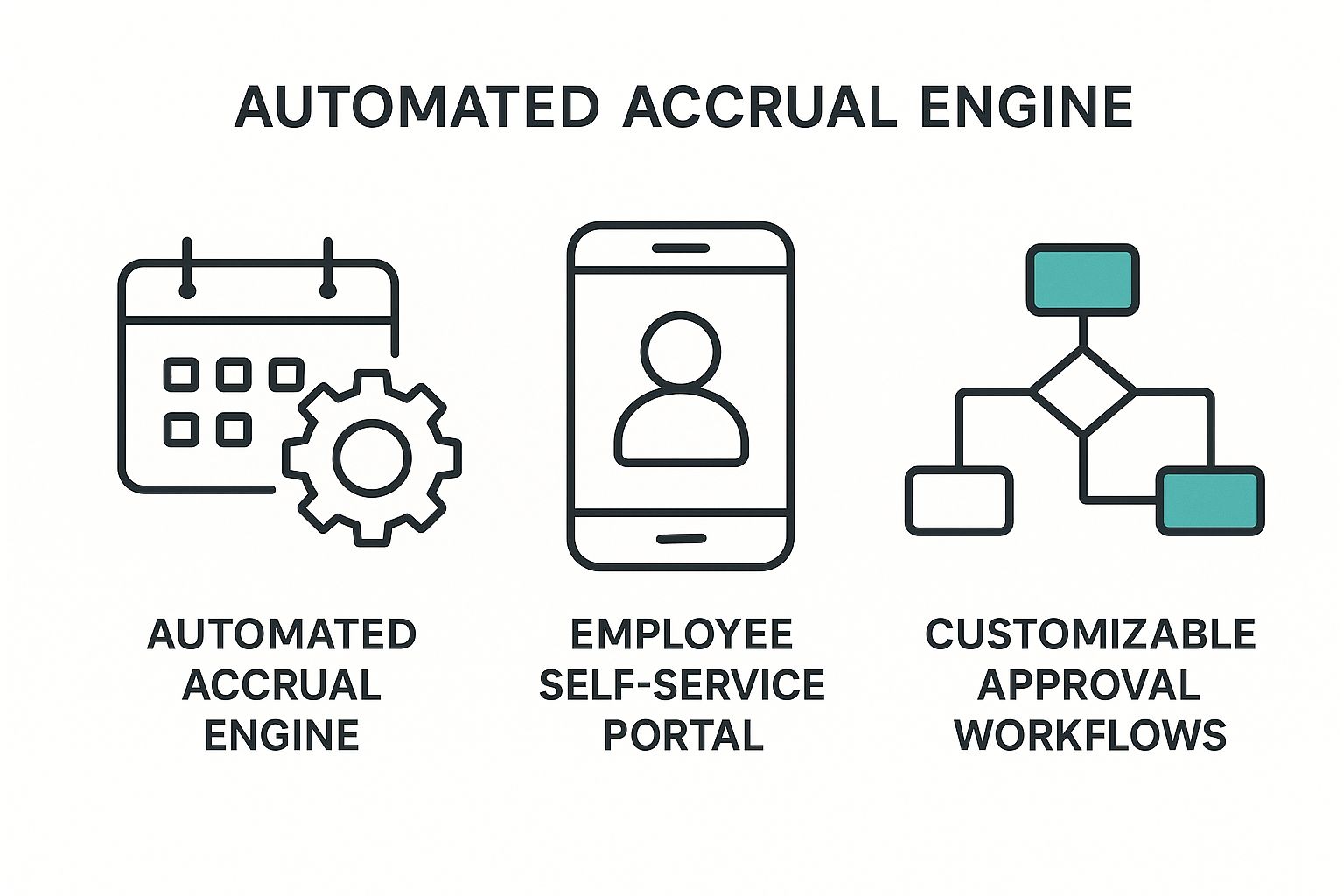
Think of these three things—automation, employee access, and custom rules—as the engine that drives the whole system. They're what turn a clunky, time-consuming admin job into a fluid part of your daily operations.
Automated Accrual Engine
Trying to manually figure out holiday entitlement for part-time staff, new starters, or people with complex carry-over rules is just asking for trouble. For any UK business, an automated accrual engine is probably the single most critical feature. It’s what keeps you compliant with tricky legislation like the Working Time Regulations.
This tool does all the heavy lifting for you, automatically calculating leave allowances based on the rules you define. So, if a new employee starts halfway through the year, the system instantly figures out their pro-rata entitlement. This saves your HR team countless hours with spreadsheets and prevents expensive mistakes.
A strong accrual engine takes the guesswork and legal risk completely out of the equation. It makes sure every single employee gets the right entitlement, no matter their working pattern, which builds a much fairer and more transparent workplace.
Employee Self-Service Portal
Giving your staff more control is one of the quickest ways to cut down on admin. An employee self-service (ESS) portal empowers your team to manage their own time off without needing to go through a manager or HR for every little thing.
From a simple online dashboard or a mobile app, they can see their remaining holiday balance and pop in a request in just a few clicks. It’s a small change that has a huge effect, putting an end to the endless email chains asking, "How many days have I got left?". You can see a full list of what’s possible by exploring the core features of leave tracking software in more detail.
Customisable Approval Workflows
Every business has its own way of doing things, and your holiday approval process is no different. A one-size-fits-all approach just won’t cut it. The best software lets you build custom approval workflows that actually match your company’s structure.
What does that look like in practice? You could set up a multi-step approval, where a request goes to a line manager first, then on to a department head. You can even assign backup approvers for when a manager is on leave themselves, making sure requests don't get stuck in limbo. It’s this kind of flexibility that keeps the right people in the loop at the right time.
A Closer Look at What Matters
The table below breaks down these core features and shows the real-world impact they have across the business.
| Feature | What It Does | Benefit for UK Businesses |
|---|---|---|
| Automated Accruals | Calculates leave entitlement based on custom rules (e.g., hours worked, pro-rata). | Ensures 100% compliance with the Working Time Regulations, reducing legal risks and saving HR admin time. |
| Employee Self-Service | Allows staff to view balances, request time off, and track requests via a portal or app. | Empowers employees and cuts down on repetitive HR queries, freeing up the team for more strategic work. |
| Custom Workflows | Lets you design multi-step approval chains that match your company's hierarchy. | Guarantees requests are seen by the right managers quickly, avoiding bottlenecks and delays. |
| Team Calendars | Provides a shared, real-time view of who is away and when across different teams. | Prevents scheduling clashes, helps with workload planning, and gives everyone clear visibility. |
| Reporting & Analytics | Generates reports on absence trends, leave balances, and Bradford Factor scores. | Offers valuable insights to spot potential burnout, manage staffing levels, and make data-led decisions. |
As you can see, it's the combination of these features that truly makes a difference, moving your annual leave process from a source of frustration to a genuine business asset.
Why UK Businesses Are Making the Switch
Moving to dedicated annual leave software isn't just about finding a slicker way to do things; it's a real strategic shift for UK businesses. We're seeing companies move beyond simply patching up operational headaches and start thinking about how managing time off can give them a genuine competitive edge. The penny has dropped: how you handle leave has a direct line to your compliance risk, your finances, and your team's morale.
This is all part of a bigger picture – the digital transformation of HR that's happening right across the UK. The global market for this kind of software was worth a cool USD 1.5 billion back in 2023, and it's on track to more than double, hitting USD 3.2 billion by 2032. That's not just a small jump. It shows a massive trend towards cloud-based systems that can make absence tracking a breeze. You can find more insights about this expanding market over on dataintelo.com.
At its heart, this move is driven by a need for smarter, more reliable tools that old-school manual methods just can’t compete with.
Staying Compliant with UK Legislation
One of the biggest drivers for UK businesses is, without a doubt, getting to grips with the maze of employment law. The Working Time Regulations 1998, for example, lay down very specific rules on statutory leave, how it accrues for part-time staff, and mandatory rest periods. Trying to keep track of all that on a spreadsheet is an accident waiting to happen, often leading to non-compliance and a whole world of legal trouble.
An automated system is your safety net. It crunches the numbers for pro-rata leave instantly and ensures every single employee gets exactly what they're entitled to by law. It takes the guesswork and human error out of the equation, which is often what trips up smaller businesses.
Think of it this way: adopting dedicated software isn’t just an upgrade—it's an essential move to protect your business. It turns compliance from a constant headache into something that just happens automatically in the background, giving you some much-needed peace of mind.
Boosting Morale and Transparency
Legal obligations aside, this shift is also about creating a better place to work. When the process for booking a holiday is fair, transparent, and simple, it does wonders for morale. People can check their own leave balances and fire off a request without getting tangled in endless email chains. That sense of autonomy builds a huge amount of trust.
A clear, consistent process also guarantees fairness. It stops that frustrating feeling that some people’s requests are treated differently to others. Ultimately, this better employee experience feeds into higher engagement and a much more supportive atmosphere for everyone.
Gaining Strategic Business Insights
Finally, modern annual leave management software unlocks a goldmine of data you could only dream of getting from a spreadsheet. In an instant, managers and HR can spot absence trends, flag potential burnout risks in certain teams, and see exactly when their peak holiday seasons are.
This data-driven view allows you to be much more strategic with your workforce planning. For instance, you can:
- Allocate Resources Better: By looking at past leave patterns, you can make sure you always have enough people on deck during your busiest periods.
- Look After Employee Wellbeing: Spot who hasn't taken a break in a while and give them a gentle nudge to book some time off, helping to head off burnout before it becomes a problem.
- Improve Operational Efficiency: Get a clear picture of how absences are affecting productivity and make smart adjustments to workflows or staffing.
It completely changes the game. Leave management stops being a reactive, admin-heavy chore and becomes a proactive tool that helps the whole business run that much better.
How to Choose the Right Software for Your Team
Picking the perfect annual leave software can feel a bit daunting. With so many options out there, where do you even start? The trick isn't to find the system with the longest feature list, but to find the one that fits your company's unique DNA like a glove.
Before you even look at a single product, take a moment to look inwards.
How big is your team? A startup with ten employees has completely different needs to a company with 200. The same goes for your industry. A construction firm with staff always on-site will need different features from a fully remote tech company. The goal is to match the software’s capabilities to the real-world, day-to-day running of your business.
Assess Your Technical Needs
Once you've got a handle on your company's profile, it’s time to think about the tech side of things. Your new leave tracker can't live on an island; it needs to play nicely with the other tools you already rely on every single day.
Think about the systems you currently use:
- Payroll Software: You'll want your leave tool to talk to your payroll system. This is a crucial link for making sure paid time off is calculated perfectly, saving you from headaches and costly mistakes down the line.
- Calendar Integration: Can staff and managers sync approved holidays directly to their Outlook or Google Calendars? This simple feature is a game-changer for visibility, helping everyone avoid scheduling clashes.
- HR Systems: As your business grows, you'll want your leave tool to plug into a broader HR platform. For smaller companies, understanding how different platforms can work together is just as important. Our guide on HR systems for small business goes into more detail on building an effective tech stack.
Focus on User Experience and Scalability
Let’s be honest, a powerful system is completely useless if your team hates using it. The best annual leave management software feels natural and straightforward for everyone, from your tech-whizz admin to an employee who isn't glued to a computer all day. Look for a clean interface and a simple process for booking and approving time off. In today's world, mobile access isn't a 'nice-to-have'—it's essential for any flexible workforce.
Think about tomorrow, not just today. The software you choose should be able to grow with you. A scalable solution will adapt as you hire more people and your leave policies become more complex, saving you from a painful migration process in a few years.
Finally, never underestimate the value of good old-fashioned customer support. When you're stuck or just have a quick question, you need a responsive and genuinely helpful team on the other end. While you're weighing up your options, ask vendors about their support channels and how quickly they typically respond. A solid support system is a massive part of the long-term value you’ll get from the software.
Seeing Leave Management Software in Action
It’s one thing to talk about benefits in theory, but what does this software actually look like on a day-to-day basis? To really get a feel for it, let's walk through a common scenario in a typical UK business that’s made the switch.
Picture a busy marketing agency in Manchester. Not long ago, their holiday requests were a jumble of forwarded emails, out-of-date spreadsheets, and shoulder taps in the hallway. Now, they use a proper system to handle everything from annual leave to sick days.
A Day in the Life with Automated Leave
Let’s say an employee, Sarah, wants to book a week off for a much-needed holiday. Instead of firing off an email to HR asking about her remaining days, she just opens an app on her phone. Right there on the screen, she can see she has 12 days of holiday left to take. Simple.
She picks her dates, adds a quick note for her manager, and hits ‘submit’. The whole thing takes less than a minute.
Her manager, David, gets a notification instantly. He can pull up the team calendar within the system and see at a glance that no one else has booked that week off. Project deadlines are safe. With one click, he approves the request, and Sarah gets a confirmation email straight away.
Behind the scenes, the system has already updated everything automatically:
- Sarah’s leave balance now shows her new remaining total.
- The shared company holiday calendar is updated for everyone to see.
- The central HR records are perfectly in sync.
This is a great example from BambooHR's UK site showing what that employee view looks like.
Giving employees this kind of direct access to their own information is a game-changer. It almost completely eliminates those constant, back-and-forth emails to HR asking, "How many days do I have left?"
Strategic Insights for HR
Fast forward to the end of the month. The HR manager is looking over the absence report, which the software generated automatically. They spot an interesting trend: a pattern of frequent, unplanned single days off, all clustered in one department. This could be a red flag for burnout.
Armed with this data, HR can now have a proactive, supportive chat with that team's lead about workloads and wellbeing. It's a move from reactive problem-solving to genuinely strategic people management.
This simple story gets to the heart of what annual leave software really does. It takes a messy, time-consuming admin chore and turns it into a smooth, transparent process that helps everyone—from the employee booking a break to the HR team looking at the bigger picture.
Systems like BambooHR are popular across the UK for a reason. They help businesses manage everything from standard holidays to more complex statutory leave like maternity or paternity, all while keeping things compliant with employment law. That self-service portal is the key, slashing the admin workload and making the whole company more efficient. If you're curious, you can explore more about the top absence management solutions for 2025 and see how they are reshaping HR.
Getting Your New System Up and Running
Bringing in new software can feel like a massive project, but a smooth launch really just comes down to having a clear, well-thought-out plan. Shifting from spreadsheets or paper forms to a proper annual leave system doesn't happen by magic; it’s the product of careful preparation and solid communication.
Think of it like setting up a new kitchen. You wouldn't just throw all your old utensils into the new drawers. You’d plan where everything goes to make it work for you. The same principle applies here.
The first, and arguably most important, step is getting your data sorted. You’ll need to move all your existing leave information across—things like every employee’s current holiday balance and any holidays they've already got booked for the future. Getting this data import right is absolutely crucial. It ensures everyone starts on the right foot with an accurate, trustworthy record from day one.
Laying the Groundwork
With your data safely in the new system, the next job is to mould the software to fit your company's specific rules. This isn't just a technical box-ticking exercise; it’s about weaving your company policies and culture right into the tool itself.
Key setup tasks usually involve:
- Building Your Leave Policies: You need to clearly define the rules for annual leave, sick days, and any other absence types. This includes making sure everything aligns with UK statutory requirements.
- Mapping Out Approval Workflows: Figure out who signs off on requests for each team. A small team might just need a simple one-step approval from a line manager, while other departments might require a more complex, multi-layered process.
- Customising Work Patterns: It’s vital the system understands your workforce. Make sure it can handle part-time staff, flexible hours, and any non-standard working weeks, otherwise, holiday calculations will be all over the place.
So many people rush this part. Take your time to get the policies and approval chains right from the very beginning. It saves a world of headaches and builds trust in the system down the line.
Bringing Your Team on Board
Once the technical side is handled, the focus has to switch to your people. You could have the best software on the planet, but it’s worthless if nobody knows how to use it, or worse, doesn't want to.
A good approach is a phased rollout. Why not start with a single department as a pilot group? This gives you a chance to spot and fix any teething problems before launching it across the entire company.
Most importantly, you need to show your team what's in it for them. Run a few short, friendly training sessions for both employees and managers. Walk them through how much simpler it is to book and approve time off. Get them excited by pointing out the real-world benefits, like being able to check their remaining holiday balance on their phone in seconds.
Clear communication, good training, and ongoing support are what will make your new annual leave management software a genuine success, not just another piece of software.
Your Top Questions About Leave Management Software Answered
Even when you see the clear advantages, it's natural to have a few practical questions rattling around before you commit to new software. Let's dig into some of the most common queries we hear from UK businesses thinking about making the switch.
What's the Typical Investment?
The cost can vary quite a bit, but most platforms run on a subscription model. You'll typically pay per employee, per month, with prices usually landing somewhere between £2 and £8 per user.
Most providers structure their pricing in tiers. A basic plan will handle the essentials like tracking holidays, while the pricier tiers often add advanced reporting, integrations with your other business tools, and the ability to manage more complex leave rules. The best approach is always to ask for a direct quote based on your team's size.
Can It Really Handle Complex UK Leave Policies?
Absolutely. In fact, this is where good software truly shines. One of its greatest strengths is the ability to automate and manage the often-fiddly rules that come with UK employment law.
A solid system will handle:
- Pro-rata Calculations: Automatically figuring out the correct holiday entitlement for your part-time team members.
- Statutory Leave: Managing all the different legal entitlements, from maternity and paternity leave to sick pay.
- Custom Company Rules: Letting you set specific policies, like how many days can be carried over into the new leave year.
When you're looking at different options, make sure you double-check that the system is flexible enough to handle your company's unique policies.
We often get asked about data security, especially with cloud-based systems. It's a valid concern. Reputable providers make this a top priority, using robust encryption and adhering strictly to GDPR. Always ask a potential vendor about their security protocols to ensure your employee data stays safe and sound.
Ready to make holiday planning simple? Annual Leave Tracker offers a clean, straightforward solution built specifically for UK businesses. Get started today and see how easy leave management can be.
Ready to Transform Your Leave Management?
Join 500+ companies using Annual Leave Tracker to streamline their HR processes.
Related Articles

How to Calculate Pro Rata Holidays A Simple UK Guide
Working out pro rata holidays is actually quite straightforward. At its core, it's just about making...
September 24, 2025
How to Calculate Annual Leave Entitlement: UK Guide
Figuring out annual leave entitlement doesn't have to be complicated. The basic formula is simple:...
September 24, 2025
HR Systems for Small Business A Complete Guide
Trying to run a small business using spreadsheets and a jumble of different documents is a bit like...
September 25, 2025